Broadleigh Gardens .  
European mail-order specialists in small bulbs and herbaceous plants.  
Barr House, Bishops Hull, Taunton, TA4 1AE
01823 286231 (Fax) 323646

All pictures on this site copyright ©2002 Christine Skelmersdale are available for licensing. All rights reserved.


Home Page


IRIS
a versatile plant for the whole garden
We specialise in Winter flowering iris, Pacific Coast iris, bulbous iris, species iris and dwarf bearded iris.

Please see our Online Store for current availability.  Iris are listed in both our catalogues

1. IRIS IN THE GARDEN

 
This article is split into Iris for
Mixed Border, Water side, Semi-shade and the Rock Garden. There are cultivation notes at the end.
 

Introduction

Whether its a haze of flag iris shimmering in the heat of Monet's garden or rimming his waterlily pool, a bowl of stylosa on a winter windowsill or a bunch of Dutch Iris in a florist's bucket the word iris conjures a host of different images. Not only do they flower for more than 6 months, from Nov-June, each has  very different cultural requirements. Appropriately named after the Greek goddess of the rainbow, they are found wild throughout the Northern Hemisphere and have long been cultivated for their colourful flowers. In Turkey one has always been  used to decorate grave yards whilst in Italy another is an important ingredient in the perfume industry. I have seen them massed in high Himalayan bogs, clinging to life on an arid Greek hillside and lining the banks of our local canal. With such a disparate distribution there is sure to be  an iris suitable for virtually every part of the garden.

Iris reticulata danfordiae
 
Iris danfordiae


Mixed border
 
The first iris that usually springs to mind is the flag or bearded iris. These have a broad, fleshy rhizome on the surface of the soil  and a fan of grey-green leaves. They have a long history of cultivation and even in the 17th century many hundreds of hybrids were recorded. Some of the best known are still cultivated today such as the rich purple Iris germanica, Iris g. Florentina (orris root) and the variegated form of the scented Iris pallida. Although they all have relatively small flowers they are very tolerant garden plants for any well drained soil in full sun.
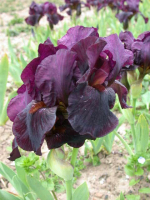
         

Iris 'Langport Wren'

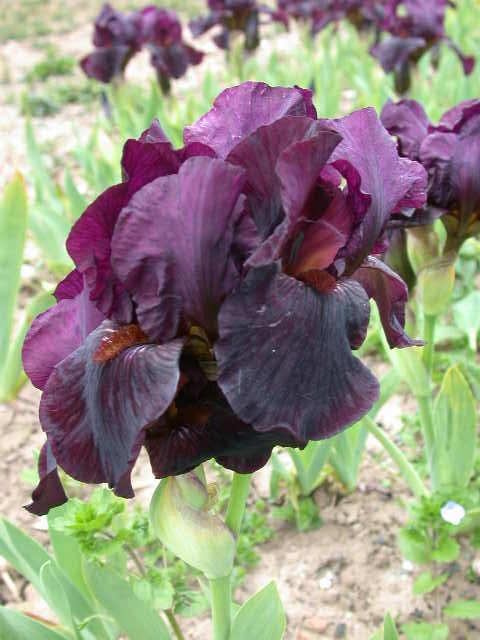
  The large and often dramatically coloured modern bearded iris has a complex genetic history. They are architectural in form, carrying their large, flamboyant  flowers on upright stems. For ease they have been classified according to height, from tall (70cm) to miniature dwarf (-20cm). Curiously their flower size does not vary so dramatically, most being 3-6" across. They are easily grown in a limey soil in full sun and their colours, covering a huge spectrum, often contrasted or  subtly mixed, means that there is always one to match any colour scheme. I must admit that I choose them by colour and not name, there are so many available. Although traditionally grown by themselves I prefer them as part of a mixed planting and use them to back our herb garden. Care must be taken to ensure that the rhizomes are in the sun and not shaded by surrounding plants. In a wide border the intermediate varieties, such as the almost red-black Iris 'Langport Wren', are perfect for the middle  with  some of the dwarf bearded iris along  the very edge.

One of the easiest, for a soil that is not too dry, is Iris sibirica and its hybrids. They produce dense clumps of slender leaves topped in May or June by a mass of dainty flowers. These may be blue, violet, white or attractively veined. Their early flowering and neat habit even when out of flower, makes them ideal for the mixed border. The lovely creamy-yellow and white 'Butter and Sugar' is one of my favourites as is the free flowering 'White Swirl' The robust, 1m tall Iris orientalis with its slender yellow and white flowers is ideal for a dry, sunny border. Although by no means a showy plant every garden should have a clump of the dwarf  Iris graminea tucked into a corner. The slender, deep purple flowers are almost  hidden by the narrow leaves but they really do smell of hot plum tart and are produced in such profusion that there are plenty to cut.

I have not mentioned the Xiphium ( Dutch, English and Spanish) iris as personally I think these rather stiff florist iris can be difficult to integrate into a border. Tight clumps of a single colour are the most effective way of planting them, although that may take some effort to achieve as the bulbs are usually sold in mixed colours only. One of the most effective associations I saw occurred by chance. A solitary golden Dutch iris was almost obscured by a cloud of violet aquilegia flowers that had seeded on top of it leaving it rather like an exotic butterfly and beautifully disguising its inherent stiffness..


Water side
 
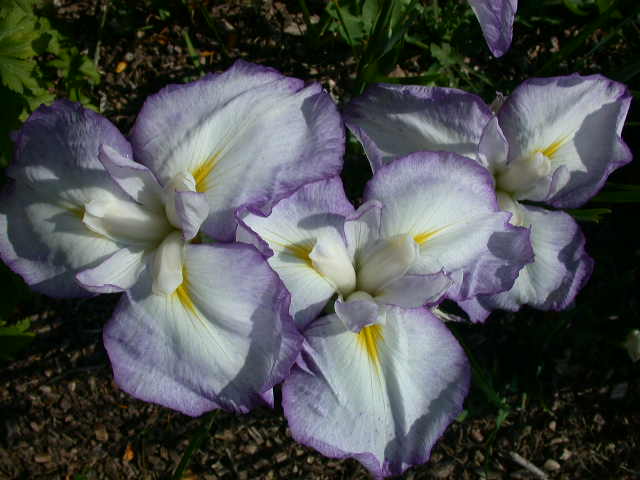
Iris are one of the easiest and most attractive of the marginal plants. Only Iris laevigata itself must be grown actually in water all the time, Although they make attractive pond side plants, Iris ensata and Iris versicolor will also grow quite happily in any moist, rich soil that does not dry out and preferably does not contain excessive lime. There are many named forms and they come in all shades and mixes of blue, purple and white, including double flowered varieties. Some of the most dramatic are the modern Japanese hybrids which have unbelievably complicated marking, There is a fine collection of them in the wild garden at at Wisley, a gift from a Japanese student. I find them very vigorous and easy to propagate by division early in the spring, although August is the more traditional  division time for these and most other  iris.
     
The familiar yellow flag iris of the water meadows. Iris pseudacorus, is much too vigorous for most gardens. However the almost glowing golden leaves of Iris p.'Variegata' are particularly beautiful in early spring. It can be grown in an ordinary border, provided the soil is not too dry, and where it will be of  a more manageable proportion than if it was alongside a pool.  I prefer the delicate lemon flowered form which I grow beside my large pond where it is mixed with Zebra grass and a golden rush. There are some fine new forms with dramatically marked flowers - 'Roy Davidson' and 'Tiger Brother'. But no matter which form is grown do not let them seed or they will quickly become a nuisance. I must admit that I also find the blue Iris versicolor a little too generous with its offspring.
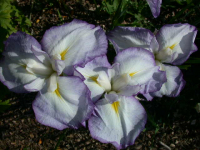
     

iris ensata
All forms of Iris sibirica love the moist soil beside a pond. They flower earlier than the traditional water iris and are useful to extend the season as well as adding yellow to the usual blue/white  colour range. The shorter Iris  setosa also thrives in the dampness of a pond margin, producing its light blue or violet flowers in early summer. I 'Gerald Darby' is much more robust, producing a succession of strongly veined purple flowers on well branched, almost black stems. The most dramatic of the water loving iris are the Japanese I. ensata hybrids with their amazing flat flowers, often streaked and marbled.

 
Dry, sunny borders
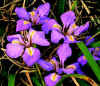
 

One of the joys of winter is the perpetual succession of blooms on my various forms of Iris  unguicularis - still better known under the old name of
Iris stylosa. Whenever the temperature rises above freezing for a few days they will produce flowers, many hundreds over the season on established clumps. All are native of the poor soils and dry conditions of the S. Mediterranean and N. Africa and flower best when tucked in against a south facing wall.  There are many forms available but I still think Iris 'Mary Barnard' is one of the best. It is certainly the most floriferous. It has slightly narrower leaves than the type and starts producing its rich purple flowers early in November and, in cool springs, has been known to continue well into April, although March is more normal. One common complaint is that established clumps tend to be rather untidy in appearance. This can be partially overcome by reducing the leaves to 2/3 their length in late autumn and by gently raking out the dead foliage. This  has the additional benefit of also reducing the resident snail population that frequently causes unsightly holes in the flowers.
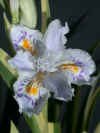
 

Iris unguicularis


Iris unguicularis


A warm, sheltered wall is also the perfect home for  the slightly tender I.japonica.These have a broad fan of leaves and exotic pale blue or white frilly flowers, dramatically splashed  with purple and with an  orange crest.  'Ledger's Variety' is reputedly the hardiest form. There is also a variegated form with attractively striped green and white leaves. Iris tectorum is another crested Chinese iris for similar conditions.

 
Semi shade
 
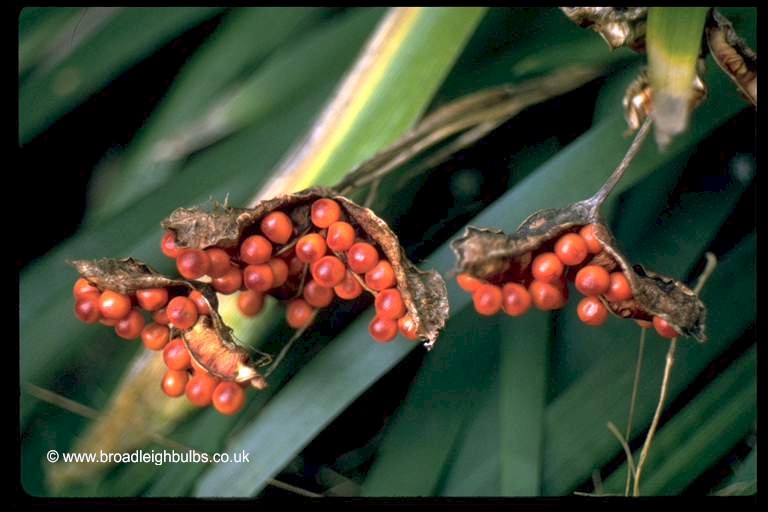
Although iris are principally associated with  full sun there are some species that not only tolerate but actually thrive in cooler conditions.  Iris foetidissima, called the roast beef iris after the smell of its crushed leaves, is one of the most adaptable plants regarding soil or position. It is is naturalised here in Somerset, often appearing in hedgerows, and can be somewhat invasive. The plant that I enjoy most  has seeded itself into a mat of variagated vinca carpeting the base of a huge yew tree. I never notice its slender leaves and certainly overlook the insignificant brownish flowers that appear in April. Then in September the fat seed capsules open to reveal glowing, sealing wax red seeds that remain on the plant well into the new year, a perfect foil for the pale vinca. There is a variegated form, valued as a foliage plant in its own right although it tends to be prone to rust if not divided regularly.
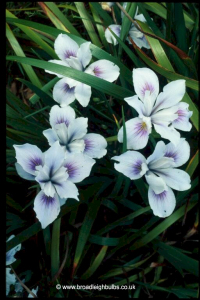
 

Iris foetidissima (berries)

Iris foetidissima (berries)


Iris 'Broadleigh Carolyn'
Iris Broadleigh Carolyn

  For many years Broadleigh Gardens has been virtually synonymous with the evergreen Pacific Coast iris. Often called "orchid" iris when we show them at the Chelsea Flower show, they are the result of crossing various Californian species. The resultant progeny have one of the widest ranges of colours of all the iris, usually with a contrasting, veined mark on the falls.   All require a neutral to acid soil and are particularly effective used, as I first saw them, lining a path through a rhododendron wood. Their subdued colours are  complimentary to those of the rhodos. Unlike most iris they flower just as well in partial shade as full sun. The early flowering and rather upright yellow and white 'Agnes James' and the clear blue 'Broadleigh Carolyn' would be among my first choices. Like most of the non-bearded iris the clump gradually expands outwards from the center and should be divided at regular intervals, discarding the central portion. We do this in late August.
 

Not all iris are showy giants, some of the real gems of the genus are very small indeed. The tiny 6cm tall Iris cristata and the closely related  Iris lacustris also prefer a humus rich soil in partial shade. Considering the size of the tiny rhizome, connected to each other by thread-like stolons, their rather flat, blue or white, crested  flowers are remarkably large. They gradually spread outwards to form quite extensive patches and are are best divided just after flowering.

 
Although Iris lazica is an Iris unguicularis relative it comes from the cooler Black Sea coast and prefers a  semi-shaded position, as we dicovered to our cost having struggled for some years to grow it in full sun  with our main Iris unguicularis collection. It is now much happier in a shaded bed under a north wall where it freely produces its narrow, heavily veined purple-blue flowers. 


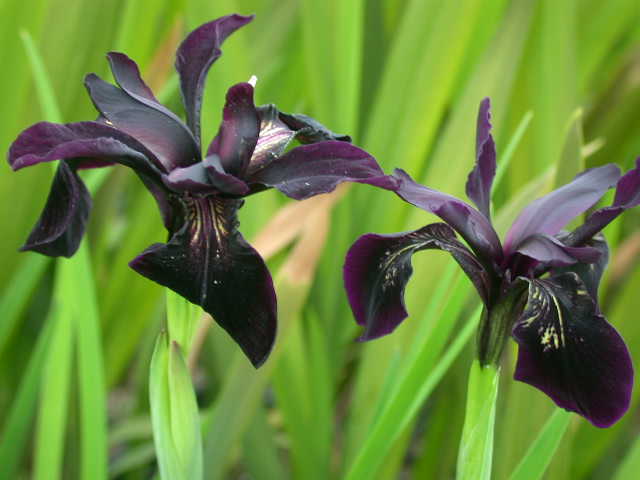
I shall never forget seeing the striking Iris chrysographes high in the mountains of Yunnan. Although related to Iris sibirica I grow it as an understorey in a mixed shrub border where there is plenty of moisture available. It is a highly variable plant and it is well worth hunting for the best forms which have rich, velvety, almost black flowers.


Iris reticulata 'Edward'

Iris 'Edward'


Iris histioides 'George'


Iris Katharine Hodgkin


iris Dunlin

Rock Garden
 
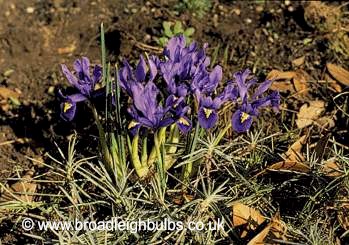
As winter eases its grip on the garden so the first of the bulbous iris appear. These are members of the reticulata group. All produce narrow, triangular leaves and  a single, slender bloom, principally in shades of blue and purple, often with an attractively contrasting orange or yellow mark at the top of the fall. They are best planted in small clumps and are ideal for a sunny rock garden where they associate well with other early spring flowering bulbs such as crocus. I like to grow them through low growing grey foliage plants. Reticulata iris are naturally snow melt plants of the high mountains in the Middle East, conditions that are not easily replicated here. One of the principal problems is that after flowering the bulb splits into many tiny bulbs that can take up to 7 years to reach flowering size again. Deep planting (20cm) will discourage splitting however I'm afraid I take the lazy way out and plant a few new clumps each year. 'Harmony' and 'Edward' are two of my favourites. Sadly the very vigorous Iris histrioides 'Major' is no longer available although its rich purple form 'George' is proving to be a good substitute.  Alternatively you could try the unusual Iris 'Katharine Hodgkin'. Its exotic colouring of cream overlaid with a blend of light yellow and greeny-blue comes from its parents, Iris histioides and Iris winogradowii, the latter having also imparted its higher tolerance  of our climate making it a reliable, free flowering perennial provided you keep the slugs at bay.
The dwarf bearded iris also make their home on the sunny rock garden where their samm stature is perfect for the other low growing plants. They range in height from 4" to 10" and come in a kaleidoscope of colours, from simple single colours to amazing combinataions. 


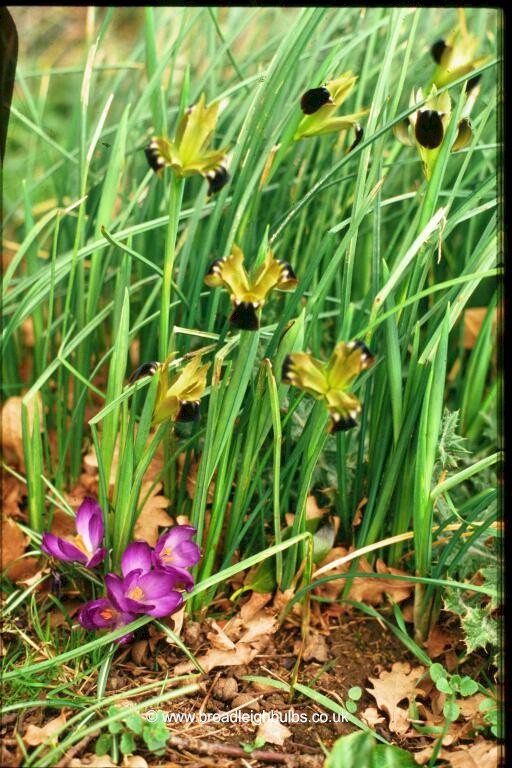
Although not strictly speaking an iris, Hermodactylus tuberosus, the Snake's Head or Widow Iris, with its finger-like tubers and velvety brown flowers is very closely related to Iris reticulata. It will grow rapidly in a light well drained soil but will only flower well if given a dry summer dormancy. Here it has become naturalised in grass under a large oak which keeps it dry in summer.

  Iris tuberosa
Iris tuberosa  (hermodactyllis)
 

Iris bucharica

Iris bucharica

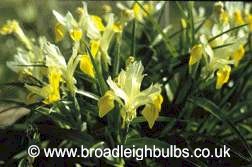
My rock bank is also home to two very dissimilar  species.  One of the most unusual iris, both in and out of growth is Iris bucharica. It is the only   member of the beautiful Juno iris group that can be grown with ease in the open garden.   Its strange, greenish yellow flowers rise out of an interlocking fan of shiny  apple-green leaves and come from a rootstock that is half bulb and half tuberous root. It flowers in mid spring. Flowering later in the summer is a dwarf, evergreen iris from the Balkans and Turkey. Iris sintenesii is easily grown and deserves to be more widely grown.  At first glance the flowers appear to be a deep violet-blue  but a closer inspection reveals them to be a heavily veined white, which gives them an almost metallic sheen.
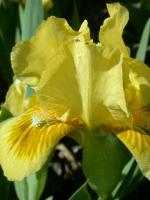
 

Iris 
'Cannington Ochre'


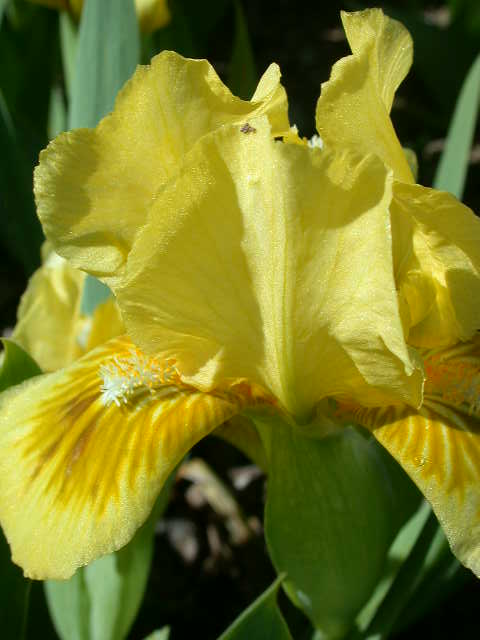
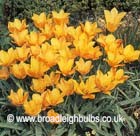
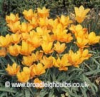
The dwarf bearded iris also find their home among other low growing plants on the rock garden.. The strange  Iris 'Forest Light' has long inhabited my rock garden where its greeny-yellow flowers associate well with the grey blue of  Ipheion uniflorum. Another good combination is 'Little Sapphire' with Tulipa batalinii 'Apricot Jewel'. Once again there are many hundreds  of varieties and colour combinations to choose from.

  Tulip batalinii Apricot Jewel
Tulipa batalinii 'Apricot Jewel'


Cultivation/ propagation
 
1. With the exception of the bulbous iris all should be planted with the rhizome at or just below the soil surface.
2. Late summer is the best time to move or divide most  iris.
3. When dividing iris reduce the rhizome to a young, vigorous piece, discarding the old rhizome.
4. Water all iris in dry weather the first season after transplanting to help them establish a new root system.
5. Plant bulbous iris 4-8" deep in autumn. Juno iris should only be planted 2" deep. Lift and divide bulbous iris as the leaves fade.
6. Most species iris can be grown from seed although some may take many years to flower. Hybrid iris will not come true to name.
7. Feed with a low nitrogen, slow release fertilizer.
8. With the exception of water edge varieties iris  prefer a well drained soil. Add grit and humus to heavy clay soils. Lime may be beneficial for very acid soils.
 
9. Avoid covering the rhizome with mulch, especially FYM

   
We sell different iris at different season:

Spring (January) catalogue- plants posted Feb-April

Dwarf bearded, species iris such as chrysographes, ensata, sibirica and winter iris ( I unguicularis or stylosa)

Autumn (June) catalogue - bulbs posted Sept-Nov

Pacific coast, reticulata and other bulbous iris

See Online Store for current availability


2. Dwarf Bearded Iris
Article published in The Garden April 2009

The genus iris is one of the most diverse and popular garden plants with flower shapes and colours almost as variable as their habitats. Iris were named after the Greek goddess Iris, the personification of the rainbow, in recognition of their rainbow hued flowers.  Iris species are found throughout the Northern temperate latitudes, growing in conditions as diverse as high mountains pastures to hot Greek hillsides.  This means that their cultural requirements are equally diverse, some preferring a cool water’s edge location whereas others require a hot dry situation. The bearded iris fall into the latter group. They have been cultivated since Classical times and depictions of them have appeared in literature and painting for more than 2 centuries. They are pictured in the palace at Knossos on Crete and the French heraldic device, Fleur-de-Lis, was an iris not a lily.

Iris germanica, the common flag or bearded iris, with its fat, surface creeping rhizomes and broad fans of deciduous leaves has been in cultivation for many centuries and has spread all around the word from its Iberian home. I have seen purple flag iris flowering in old oil drums outside a stone house high in Tibet and in gardens on the island of Chiloe off the coast of Southern Chile . There can hardly be a garden in UK without at least one representative of this group, whether it is the classic old purple flag or one of the spectacular modern hybrids with their amazing colour combinations.

Iris breeding took off in the late 19thC and by the early part of the 20thC whole beds were devoted to them. Unlike the simple species modern hybrids have an improved elegance of form, with multiple buds to a stem and beautifully proportioned flowers. The standards are large and upright while the falls are full and flaring but it is their marvelous range of colours that really sets them aside. No visitor to the Chelsea Flower Show can fail to marvel at the spectacular colour combinations displayed on the specialist iris exhibits. 

Unfortunately, however seductive their flowers may be, TBI are not quite so easy to integrate into our modern style of gardening. They all need a well drained, rather poor soil and a situation where the sun will fall directly on the rhizome for most of the time if they are to flower well. They became a popular choice for narrow beds under a sunny wall which could be devoted to them. However their all too brief flowering period, and the hard work involved in the annual division of the rhizomes has meant that they are perhaps not as popular as they once were and the classic iris bed is a disappearing feature of our gardens. 

Bearded Iris are useful to fill that awkward gap in flowering after the tulips fade and before the majority of the herbaceous perennials start but successful integration into a mixed border is difficult. Here the soil is more fertile than they truly like and any competition or shade from neighbouring plants curtails their flowering. Although their flowers are tall they need to be grown at the front of the border to maximize the sun on their rhizomes and it is therefore not possible to hide the rather large holes left at the edge of the border when they finish flowering.

However their dwarf cousins are much more versatile and distinctly underrated as garden plants. They have an equally long and complex history and are the result of crossing naturally dwarf species such as I. pumila (eg I.pumila ‘Atroviolacea’), with the modern tall bearded iris. Breeders divide them into 2 groups depending upon their height. The Miniature Dwarf Bearded (MDB) are 10 - 20cm tall whereas the largest group, the Standard Dwarf Bearded (SDB) are between 21 – 40cm tall. This is an entirely arbitrary classification and there is no difference in performance between the 2 groups.

The first hybrids had clear, single colours such as blue, purple or yellow eg  ‘Stockholm’, ‘Mary McIlroy’*, ‘Zero’* and ‘Open Sky’, their beauty being in their dwarf stature but then gradually patterns, first as veins, known as plicates eg ‘Dunlin’ and then stronger contrasting marks appeared eg ‘Meadow Court’.  Finally the colours merged rather like an untidy artist’s palette where all the colours blend into each other often in a dramatic manner eg ‘Quark' , 'Peach Eyes' etc  

Although they are dainty and rather delicate in appearance they are fully hardy with a good  balance between leaf and flower, the flowers being 2-3” diameter, the best having well rounded, upright standards and falls that are held horizontally, not curving under, so that the patterns are visible; especially important as they are to be viewed from above. They flower for about 1 month in late spring (April-May) just before the TBI. Most have only 1-2 flowers on a single stem but each established plant can be literally smothered in flowers. There are some so-called Remontant forms but I have yet to find one that is truly repeat flowering. There is just an occasional late summer flower. A truly remontant iris with good flowers may come in the future. 

All are easy to grow provided a few simple rules are followed. They are shallow rooting and should be planted in a sunny, well-drained position, preferably in poorish soil with the rhizome on the surface and the roots extending downwards. Care must be taken not to allow neighbouring plants, or weeds, to encroach and smother the rhizomes. Congested clumps should be divided in late summer. The old central rhizomes should be discarded and the side ones replanted. Cut the leaves back by 50% and firm the roots well.

If you should have one, they are perfect for planting in front of TBI in a dedicated iris bed where they will flower first. Alternatively they are particularly attractive under a sunny wall, or against the house with other sun lovers such as Iris unguicularis, eucomis, nerine etc., where their fans of leaves provide a good foil for the other plants and where they fill the gap in flowering between I.unguicularis of winter and the late summer/autumn flowering eucomis & nerine. They are also very effective in the narrow beds that are often found edging the path leading to the front door, where they associate well with other low growing plants, especially those with silver foliage or Helianthemums. Smaller tulips are other good companions as they like similar dry sunny positions. [example the walled garden at Wisley].

Their dwarf stature makes them ideal for a sunny herbaceous border where they make a good edging plant. Although, like their tall cousins their rhizomes must be left exposed, they are much smaller and therefore their leaves are closer together and they make rather attractive clumps of foliage along the front edge. As DBIs are individually small it is advisable to plant at least 3 or 5 rhizomes initially to form a reasonable sized patch. Single plants in a border are easily swamped. Take care to keep any mulch away from the rhizomes.

For tall bearded iris contact:
Seagate Iris 
  
Kelways of Langport   

The RHS garden at Wisley has excellent trials of all types of iris.


3.Winter iris
Article published in Gardens Illustrated Feb 2011

Brisk walks, warm fires and plant catalogues sum up winter, a time of bare branches rather than brightly coloured flowers but there is one group of plants that defy the elements to produce their jewel-like flowers in this most inclement time. These are the surprisingly sturdy winter flowering iris. There are 2 distinct groups of these – the rhizomatous I. unguicularis which flower from October to March and the bulbous  I.reticulata group which flower in late winter.  

The star of the winter garden is undoubtedly Iris unguicularis, still more commonly called by its old name Iris stylosa. This clump forming iris has tiny rhizomes and long, narrow, sword shaped evergreen leaves. It grows wild throughout the Mediterranean area where it is naturally winter flowering. It is extremely variable both in flower colour and size. It is native to dry, sunny soils and flowers best against a sunny wall where it can be left to form large clumps.

 The flowers are a typical rounded rather open iris shape in shades of blue-purple with a striking white and gold centre to the falls.  In the best forms these will start to appear in November and continue throughout the winter until they finally run out of steam in April. A cold snap with frost will halt flower production for a day or two but normal service is quickly resumed once the temperatures rise again and there is almost always a few to pick for the house. These are best pulled when in bud rather than cut. They quickly open in the warmth of a room and are one of the most cheering sights for a gloomy winter.

 Of the blue cultivars ‘Mary Barnard’ is one of the most vigorous. It is slightly smaller in stature, has narrower leaves and flowers of an intense rich purple. One of the most distinct is ‘Walter Butt’ which has very large flowers of the palest slate blue. The highly sought after white forms are often rather disappointing.  Unfortunately the smallest– I.cretensis,  ‘Oxford Dwarf’, and the slightly taller ‘Bob Thompson’ and ‘Abington Purple’ are also less hardy than the type and are probably best grown in a very sheltered position or under glass. These are only 4-8” high with more grass-like foliage.

The leaves of evergreen iris still die off regularly to be replaced by new ones. The overcrowded rhizomes and their associated dead foliage found in most mature clumps are the perfect hide away for snails which have an annoying habit of chewing holes in the unopened buds. This damage can be mitigated by reducing the leaves to about 8” in October and vigorously ‘combing’ through the clumps with a hand fork to open them up and to remove as much of the debris, and the resident snails, as possible. Congested plants should be lifted and divided, the old dead rhizomes removed and young pieces of the plant replanted with the rhizome at the surface of the soil and the roots placed downwards. This can be done either in August, when you will lose a flowering season or in early spring which is when we usually do it as it also lessens the risk of frost damage to the newly planted iris. Whenever you chose to do this the new plants must be regularly watered for the first year while they establish their root system.

 Reticulata Iris

The other group of winter flowering iris could not be more different. Instead of the mild climes of the Mediterranean basin these tiny iris come from the high mountains of the Middle East where they are buried deep in the snow all winter I. unguiculalris is naturally winter flowering but these flower as the snow melts in their Middle Eastern mountain homes and the temperature rises. In our gardens this means late winter – early spring; the first coinciding with the last of the snowdrops. Instead of clusters of surface rhizomes reticulata iris have a small pointed bulb, with a whitish netted tunic. They produce solitary flowers and long thin deep green leaves which are triangular in cross section. They are 4 - 6” tall.

 There are various species that make up this section. I reticulata is a very variable plant and most of the cultivars in commerce are wild selections. Iris histrioides has much bolder flowers. Sadly the best known form of this, I histrioidesMajor’, is no longer available but other cultivars are just as easy. There are a few excellent hybrids.

 
It has always been recommended that reticulata iris should be planted on a sunny rock garden. But in this position the bulbs have an annoying habit of splitting into tiny non flowering bulbils so they are often treated as annuals. However one year I planted a flowering potful of iris in a new shady bed where we grow snowdrops - just to give it some instant colour (the garden is open!) and I noticed that they flowered just as well the following year. I now have well established clumps in cool, humus rich soil under deciduous shrubs so there is plenty of light/moisture when they are growing but dry and shady when they are dormant. The buds will poke through in December and then wait until Feb to flower.

 Their early flowering means they also make excellent subjects for pots for greenhouse, conservatory or house. The pots should be kept outside (protected from severe frost )until the buds appear when they can then be brought in to the house to flower.

  Cultivation: The bulbs are planted in the autumn in small groups of 5 – 10 bulbs 4 - 6" deep. They are traditionally grown as rock garden bulbs in a sunny situation but the dry soil usually causes the bulbs desiccate and to split into tiny bulblets which will then take some years to regain flowering size. Extra deep planting and feeding with a low Nitrogen fertiliser is often recommended to overcome this. However bulbs that are planted in a cooler, but equally well drained, position among shrubs do not split up in the same way and will continue to flower year after year. They can be grown in light grass under trees and are excellent subjects for growing in containers and make attractive pot plants to bring indoors once the buds appear.

Pests: these early flowers are like caviar to slugs who will leave unsightly holes in the petals. The bulbs can suffer from Ink Spot disease. Infected bulbs should be thrown away.

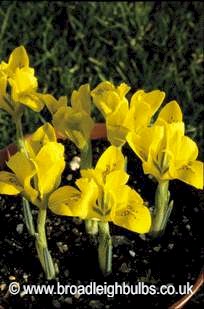
I.danfordiae This is the first of the group to flower with very angular yellow flowers with green spots in the throat and virtually no standards at all – just a vestige between the 3 falls. It tends to less reliably perennial than the others. More inclined to split. Mountains of Central Turkey   Height: 5"

I.histrioides ‘Major’ AGM wild central Turkey.This reliable cultivar has large deep blue flowers. Sadly this once popular bulb is no longer freely available but there are other good, similar cultivars. ‘Angel’s Eye’ (‘Angels’ Tears’) and ‘Lady B Stanley’ are recommended. Height: 5"

 I.reticulata

This very variable early flowering iris grows wild in N Iran to C Turkey where it flowers as the snow melts.  Over the last 100 years many colour forms have been selected. The following are some of the best cultivars. ‘Alida’ (illustarted)– is a new cultivar with exceptionally large mid-blue flowers. Good in pots; ‘Cantab’.-pale Cambridge blue; ‘Edward’, intense bright blue with a distinct orange ridge; ‘George’ AGM is a hybrid with I.histrioides and has exceptionally large flowers of rich purple; ‘Harmony’ has well-shaped flowers of a good clear blue and is scented. It is recommended for pots as the leaves remain short at flowering:  ‘Pauline’ deep purple with a distinctive white central stripe. Height: 6"


Whites – there are some rather pathetic off white cultivars but they are very weak. There are also some new hybrids with amazing colour combinations which are not yet commercially available so their vigour is yet to be tested but they are worth looking out for as they make a beautiful pot plant

‘Katharine Hodgkin’ AGM

An amazing hybrid between I.winogradowii and I.histrioides. It is much more vigorous than many of the cultivars and has significantly larger bulbs. The flowers are an extraordinary mix of cream and yellow overlaid with blue and green. It sounds dreadful but is very beautiful in the flesh. If planted in shade it will form large long lived clumps. Height: 4". ‘Frank Elder’ – similar with less yellow in the falls.  ‘Sheila Ann Germany’ is another hybrid of similar parentage and vigor with very large flowers of clear sky blue.


Other Articles

January snowdrops
February  - an insight into Lilies
March - blue bulbs
April -using small daffodils in the garden
June -      Naturalising bulbs
August: Agapanthus
September - planting in shade  
October
- Fritillarias
November - Tulip Purissima
December - Shady Characters


All pictures on this site copyright ©2002 Christine Skelmersdale are available for licensing.
All rights reserved.